
History
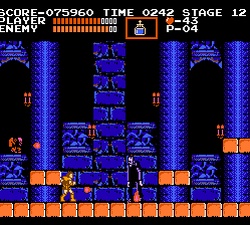
Castlevania on the NES is that kind of night where the whip crack cuts through the castle’s hush, candles flare and spit out hearts, and a chill of gothic adventure trails down the corridors. Folks called it all sorts of things—sometimes just the vampire hunter game. Behind the curtain: Simon Belmont and his leather whip; ahead: Dracula and his court—Medusa, the Mummy, Frankenstein, Death itself. Every room plays like a little survival vignette; you learn to jump clean, nail the timing, and snag candle drops on the fly. Sub-weapons—the dagger, axe, holy water, and boomerang cross—turn into lifelines when a staircase stretches to nowhere and armored knights squeeze from both sides. And somewhere in the brickwork hides that legendary roasted wall chicken—goofy and cozy, a password straight into childhood memory. It’s 8-bit horror without cheap jump scares: the soundtrack pounds with Vampire Killer and Wicked Child, the pixelated castle breathes, and you push forward because there’s no other way.
It’s remembered for a fair, old-school brand of “hardcore”: short stage-based levels, boss fights as exams, and that rare feeling that persistence actually pays. Konami took simple building blocks and forged the quintessential gothic platformer, kicking off an entire bloodline. Where it all began, how the game reached our carts, the secrets, routes, and routines that formed around it—see the series history and context. And if you want to refresh dates, facts, and names, check English Wikipedia. In playground lore, Castlevania was always “Castlevania” or just “Simon vs. Dracula,” and that’s the heart of it: not merely a score-chasing platformer, but a personal hunt where every crack of the whip is a small victory over the night.
Gameplay

“Castlevania,” Dracula’s Castle — an arcade platformer where Belmont’s whip sets the tempo. Every step lands heavy, NES‑era 8‑bit gothic: smash a candle — tink — out pops a heart that fuels sub‑weapons, not health. The arc jump is a blood‑signed commitment: think, decide, launch. Stairs are their own drama: bones clack, a skeleton lines you up, you whiff, knockback hurls you into the abyss. The castle isn’t generous, but it’s honest: hit — pause — step. Candles tick like a metronome, pixels shiver to “Vampire Killer.” It’s not about damage, it’s about nerve: a checkpoint half a screen away, the timer nudging you on, a stubborn bat carving a zigzag overhead, and you’ve got one life left.
Sub‑weapons match the hunter’s mood: a dagger for the brazen, an axe arcing into the turrets, holy water pinning the restless to the floor, a boomerang cross that comes back like hope. In Castlevania you choose in advance: a candle flares and the boss is already in your head — Medusa, the Mummy, Frankenstein with Igor, Death, Dracula himself. Save your hearts, listen to the walls — maybe there’s warm wall meat hiding inside. The best runs are stitched from tiny victories: you catch the pattern, clear a room in one breath, and the castle almost claims you as its own. Want to break the magic down into techniques? Drop by the gameplay section, then dive back into “Simon’s game,” where every screen is one step closer to sunrise over the vampire’s keep.